Saving money consistently is one of the most important habits for building financial security and long-term wealth. Yet many people struggle to save regularly. They intend to set money aside but forget, spend it impulsively, or prioritize other expenses. Over time, savings become inconsistent—and growth stalls.
The solution is automation.
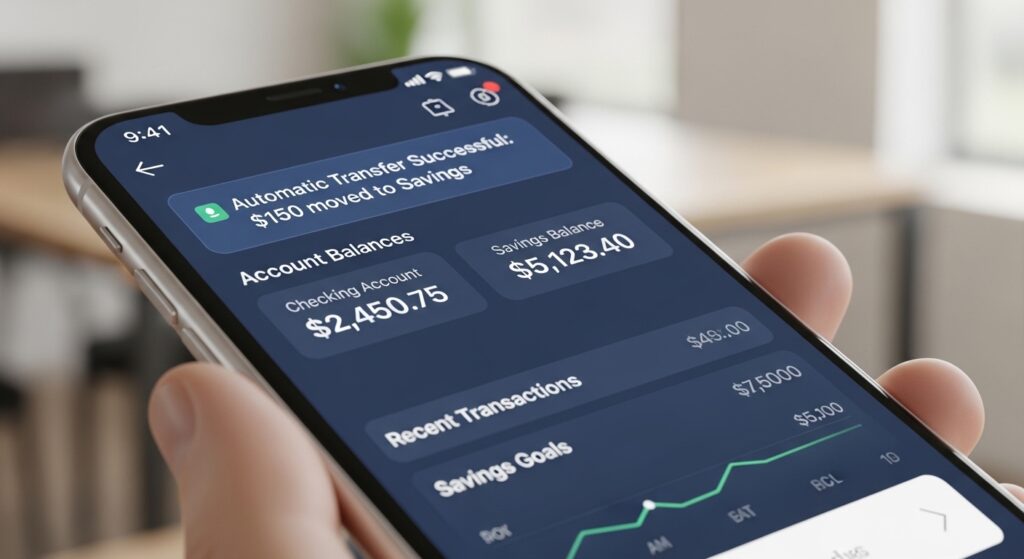
When you automate your savings, money moves automatically from your checking account to a savings or investment account. You don’t have to remember. You don’t have to decide each month. The process happens in the background, quietly building financial momentum.
Automation removes emotional decision-making from saving. Instead of debating whether to transfer money, the system does it for you. This creates discipline without relying on willpower. It also ensures you pay yourself first—before discretionary spending.
The impact of automation becomes powerful over time. Small, regular contributions grow through compounding. Interest earns interest. Investments appreciate. What begins as modest monthly transfers can transform into substantial financial growth.
Many modern financial tools make automation easy. Apps like Mint help users track spending and set savings goals. Budgeting platforms such as YNAB encourage intentional money management. Banks and investment services often provide automatic transfer features that require minimal setup.
If you want to save more without constant effort, automation is the key. In this guide, you’ll learn practical strategies to automate your savings for maximum growth—so you can build wealth consistently and stress-free.
1. Why Automation Works
Human behavior is inconsistent. Motivation fluctuates. Life gets busy. Expenses arise.
Automation solves this problem by creating a system.
When savings transfers occur automatically:
- You save before you spend.
- Emotional spending decreases.
- Consistency improves.
- Financial goals progress steadily.
Think of automation as a financial foundation. Just as businesses rely on systems to operate efficiently, individuals can use automation to manage money effectively.
2. Pay Yourself First
The principle of paying yourself first means prioritizing savings before other expenses.
Instead of saving what remains at month’s end, you allocate savings at the beginning.
Steps:
- Set a percentage or fixed amount.
- Automate the transfer on payday.
- Treat savings like a non-negotiable expense.
For example, if you earn $3,000 per month, automatically transferring 10% ($300) ensures consistent savings.
This method works because it removes the temptation to spend first.
3. Start Small and Scale

Automation does not require large amounts.
Beginners can start with:
- $25 per week
- $50 per month
- A small percentage of income
The goal is consistency, not size.
Over time, you can increase contributions as your financial situation improves. Small amounts compound into meaningful growth.
4. Use Separate Savings Accounts
Keeping savings separate from spending money reduces temptation.
Open:
- A dedicated savings account
- An emergency fund account
- An investment account (optional)
This separation creates mental clarity. You know exactly how much is available for spending and how much is reserved for growth.
Automation works best when money flows into clearly defined categories.
4. Use Separate Savings Accounts

Keeping savings separate from spending money reduces temptation.
Open:
- A dedicated savings account
- An emergency fund account
- An investment account (optional)
This separation creates mental clarity. You know exactly how much is available for spending and how much is reserved for growth.
Automation works best when money flows into clearly defined categories.
6. Use the 50/30/20 Rule (With Automation)
A popular budgeting guideline is the 50/30/20 rule:
- 50% for needs
- 30% for wants
- 20% for savings and debt repayment
Automation helps implement this structure.
You can:
- Automatically allocate 20% to savings.
- Use the remaining budget for expenses.
- Adjust percentages based on goals.
This framework simplifies budgeting and promotes financial balance.
7. Increase Savings Automatically Over Time
As income grows, savings should grow too.
Many automation tools allow gradual increases.
For example:
- Start with 5%.
- Increase to 6% after three months.
- Continue incremental growth.
This method prevents financial strain while boosting long-term results.
Small increases, applied consistently, make a big difference.
8. Eliminate Decision Fatigue
Decision fatigue occurs when constant choices drain mental energy.
Automation removes unnecessary decisions.
You don’t have to decide:
- Whether to save this month.
- How much to transfer.
- When to invest.
The system handles it.
This simplicity improves consistency and reduces stress.
9. Track Progress Regularly
Automation works best when paired with monitoring.
Review:
- Savings growth
- Investment performance
- Goal milestones
Tracking progress reinforces motivation.
Seeing results encourages continued discipline.
Platforms like Mint provide useful dashboards for monitoring financial activity.
10. Stay Patient
Financial growth is gradual.
Automation does not produce instant results—but it produces steady results.
Compounding rewards patience. Small contributions grow over the years into meaningful wealth.
Success comes from consistency, not perfection.
Conclusion
Automating your savings is one of the simplest and most powerful strategies for financial growth. It removes emotional decision-making, ensures consistency, and allows money to grow over time.
To maximize results:
- Pay yourself first.
- Start small.
- Use separate accounts.
- Automate investments.
- Increase contributions gradually.
Financial success is built on systems, not willpower.
By automating savings, you create a foundation for long-term wealth—quietly, consistently, and effectively.