
For many beginners, the stock market feels complicated, risky, and intimidating. Charts move constantly, financial news can be overwhelming, and experienced investors often use technical terms that seem confusing. Because of this, many people delay investing—even though the stock market has historically been one of the most powerful tools for building wealth.
But the truth is that you don’t need thousands of dollars or advanced financial knowledge to get started.
Your first milestone doesn’t have to be becoming a millionaire investor. Instead, a more realistic and motivating goal is earning your first $1,000 in the stock market.
That first $1,000 is important because it teaches you how the market works. It builds confidence. It proves that investing can generate real returns over time. More importantly, it helps you develop the habits that lead to long-term wealth.
When people start investing, they often think they need to predict the next big stock or perfectly time the market. In reality, most successful investors rely on patience, consistency, diversification, and disciplined strategies.
For example, many investors track broad market funds such as the SPDR S&P 500 ETF Trust because they represent hundreds of major U.S. companies in a single investment. Over long periods, diversified investments have historically grown alongside the economy.
Making your first $1,000 in the market usually doesn’t happen overnight. Instead, it comes from steady investing, smart decision-making, and allowing time for growth.
In this guide, you’ll learn practical steps to help you earn your first $1,000 from the stock market—even if you’re starting with a small amount of money.
1. Open a Reliable Brokerage Account

Before you invest, you need a brokerage account.
Popular beginner-friendly platforms include:
- Robinhood
- Fidelity Investments
- Charles Schwab
These platforms allow you to:
- Buy and sell stocks
- Invest in ETFs
- Track your portfolio
- Research companies
Many brokers also allow fractional shares, meaning you can invest with as little as $5–$10.
2. Start With Index Funds or ETFs
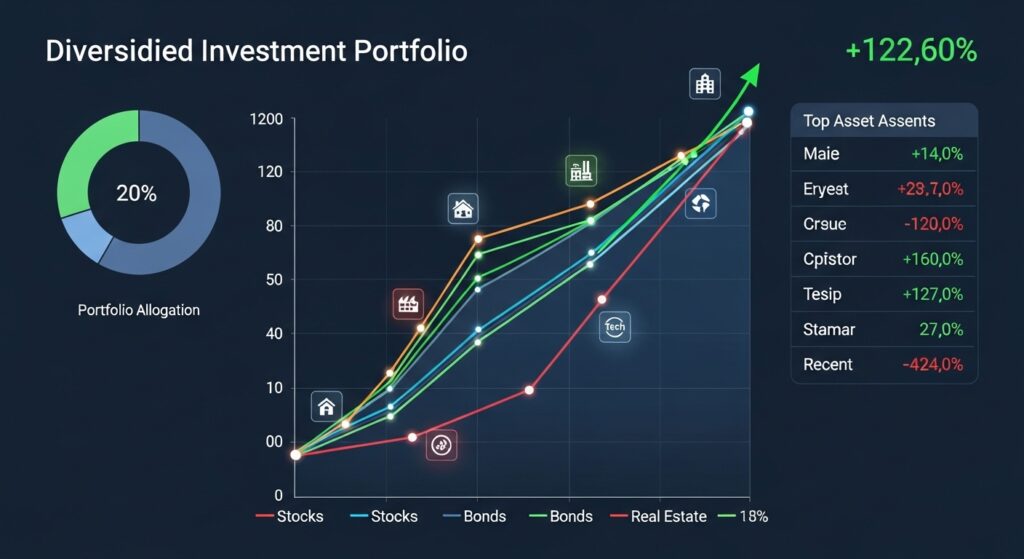
Many beginners lose money because they try to pick risky individual stocks.
Instead, consider diversified investments such as index funds or ETFs.
These funds track large groups of companies, reducing risk.
Examples include funds tracking the S&P 500, which represents many of the largest companies in the United States.
Benefits:
- Diversification
- Lower risk compared to single stocks
- Historically strong long-term returns
This approach helps beginners grow their investments steadily.
3. Invest Consistently (Dollar-Cost Averaging)

One powerful strategy is dollar-cost averaging.
Instead of investing a large amount once, you invest smaller amounts regularly.
Example:
- $50 per week
- $200 per month
Benefits:
- Reduces timing risk
- Builds investing discipline
- Takes advantage of market fluctuations
Consistency is more important than perfect timing.
4. Reinvest Your Profits

When investments generate returns, reinvesting those profits accelerates growth.
This process is called compounding.
Compounding means:
Your money earns returns, and those returns earn additional returns.
Over time, this effect becomes powerful.
Small gains can grow significantly with patience.
5. Control Risk

Making your first $1,000 isn’t about taking huge risks.
Successful investors focus on:
- Diversification
- Long-term investing
- Avoiding emotional trading
- Holding quality investments
Avoid chasing trending stocks based on hype.
Instead, build a balanced portfolio.
6. Be Patient With Market Growth

The stock market fluctuates daily.
Short-term declines are normal.
However, long-term investors focus on years, not days.
Patience allows investments to recover from temporary downturns and continue growing.
Your first $1,000 may take time, but once you reach it, the next milestones become easier.
Conclusion
Making your first $1,000 in the stock market is an exciting milestone that proves investing works.
The key steps include:
- Opening a reliable brokerage account
- Investing in diversified funds
- Contributing regularly
- Reinvesting profits
- Staying patient through market fluctuations
Remember, investing is not about quick wins. It’s about building wealth gradually through discipline and consistency.
Once you reach your first $1,000 milestone, you’ll have the experience and confidence to pursue even bigger financial goals.