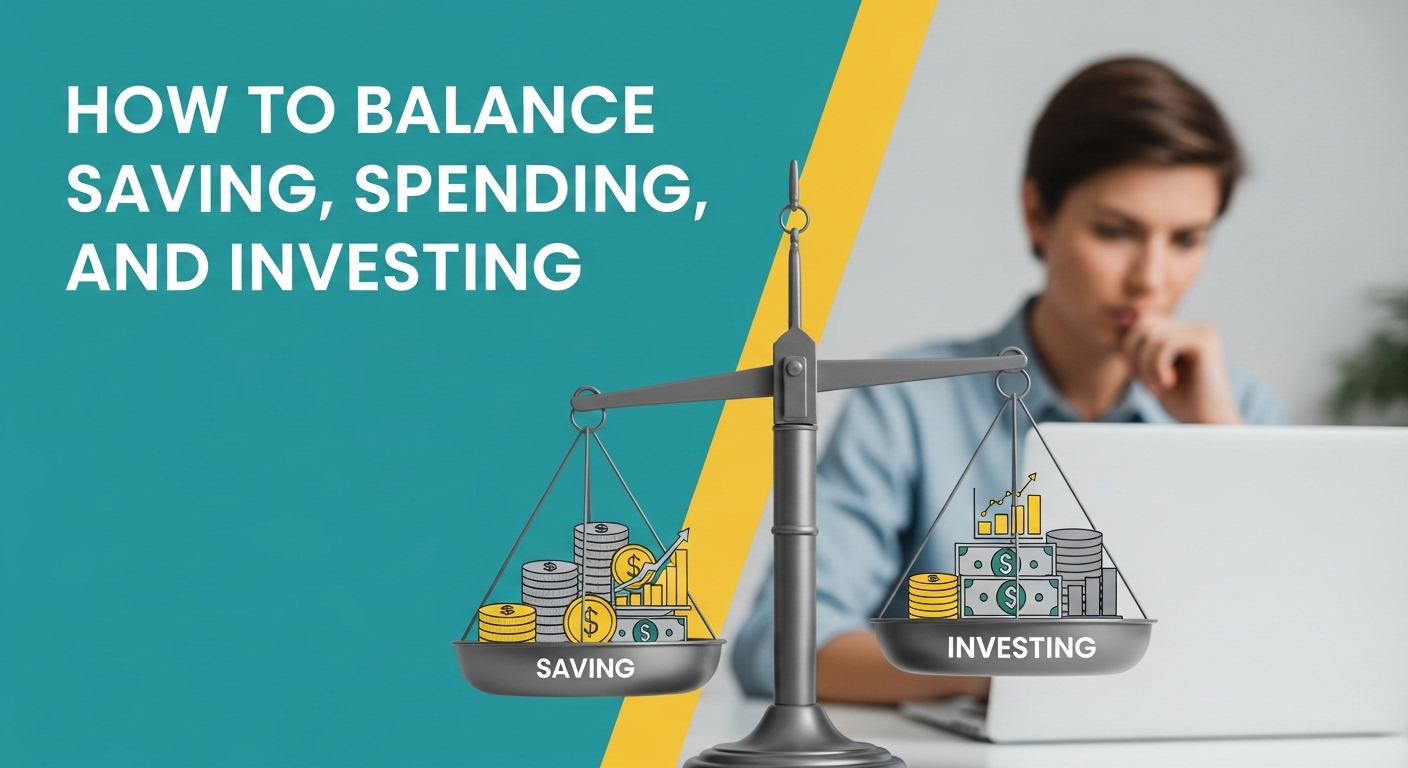
Managing money effectively isn’t just about earning more—it’s about how you allocate what you already have. One of the biggest challenges people face is finding the right balance between saving, spending, and investing.
Save too much, and you may miss out on enjoying your life today.
Spend too much, and you risk financial stress and lack of security.
Invest too aggressively without a safety net, and unexpected events can derail your progress.
The truth is, financial success isn’t about choosing one over the other—it’s about creating a system where all three work together.
Saving provides stability.
Spending supports your lifestyle.
Investing builds long-term wealth.
When these three elements are balanced correctly, you gain both financial security today and growth for the future.
However, many people struggle because they treat money management as all-or-nothing. Some focus entirely on saving but feel restricted. Others prioritize spending and fall into debt. Some jump into investing without understanding risk or building a foundation first.
The key is balance—and more importantly, intentional balance.
Modern financial tools like Mint help track spending, while platforms like YNAB help users assign every dollar a purpose. These tools make it easier than ever to manage money strategically.
In this guide, you’ll learn how to structure your finances so you can save consistently, spend without guilt, and invest confidently—all at the same time.
1. Understand the Purpose of Each Category
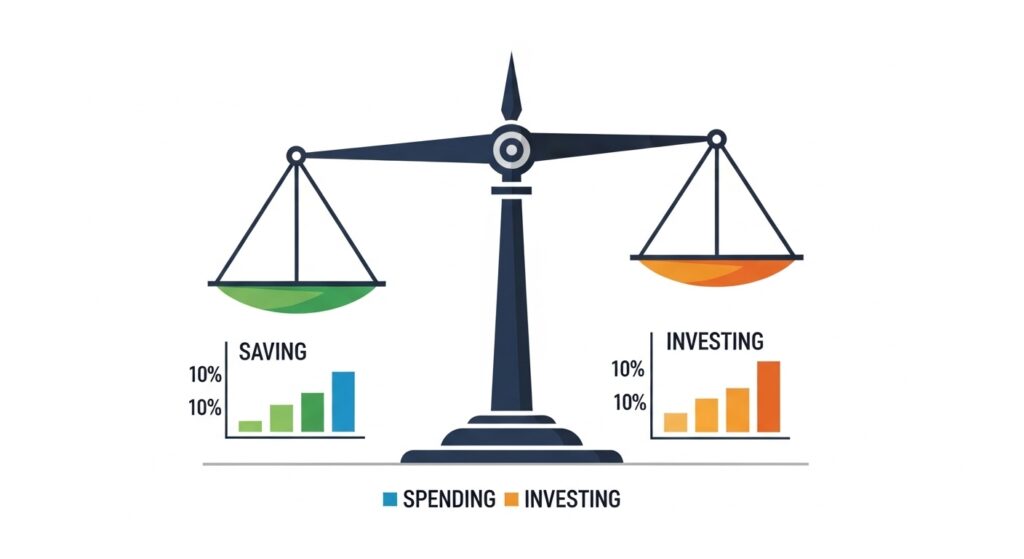
Before balancing your money, you need to understand what each category does.
Saving
- Emergency fund
- Short-term goals
- Financial security
Spending
- Daily living expenses
- Lifestyle choices
- Enjoyment and experiences
Investing
- Long-term growth
- Retirement
- Wealth building
Each plays a different role. Ignoring one can create an imbalance in your financial life.
2. Use a Simple Allocation Framework
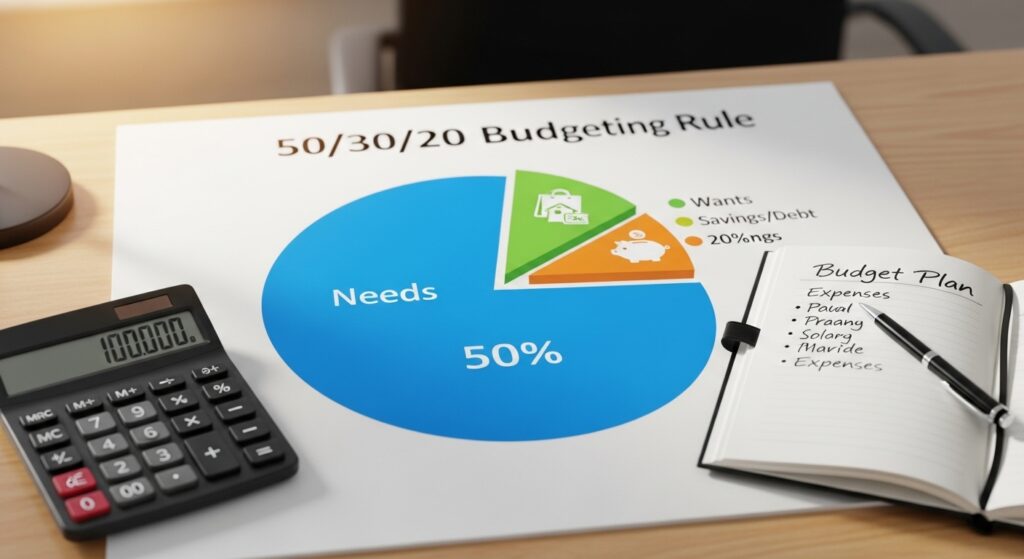
A structured framework helps simplify decisions.
A popular method is the 50/30/20 rule:
- 50% Needs (rent, food, bills)
- 30% Wants (lifestyle spending)
- 20% Savings & Investing
You can adjust these percentages depending on your goals.
For example:
- Aggressive savers may allocate 30%+ to saving/investing
- Beginners may start smaller and increase over time
The goal is consistency, not perfection.
3. Build a Strong Savings Foundation First
Before investing heavily, ensure you have basic savings in place.
Start with:
- $500–$1,000 emergency fund
- Then build toward 3–6 months of expenses
Savings protect you from unexpected situations and prevent reliance on debt.
Without a safety net, investing can become risky.
4. Spend Intentionally, Not Emotionally

Spending is not the enemy—unintentional spending is.
Instead of cutting everything, focus on what truly matters.
Ask yourself:
- Does this expense improve my life?
- Is this aligned with my priorities?
Intentional spending allows you to enjoy life without guilt while staying within your financial plan.
5. Invest Consistently for Long-Term Growth

Investing is what turns income into wealth.
Focus on:
- Consistent contributions
- Long-term strategies
- Diversified investments
You don’t need large amounts to start. Even small, regular investments can grow significantly over time through compounding.
Consistency matters more than timing the market.
6. Automate Your Financial System

Automation makes balancing money easier.
Set up:
- Automatic savings transfers
- Automatic investment contributions
- Scheduled bill payments
Automation ensures that your priorities are funded before discretionary spending happens.
Tools like Mint can help monitor progress, while YNAB can help plan allocations.
7. Adjust as Your Income Grows
As your income increases, your allocation should evolve.
Avoid lifestyle inflation by:
- Increasing savings rate
- Investing more
- Maintaining controlled spending
For example:
- Instead of spending every raise, allocate a portion to investments
This accelerates wealth building without sacrificing lifestyle.
8. Review Your Finances Regularly

Balancing money is not a one-time task.
Review monthly:
- Spending habits
- Savings progress
- Investment contributions
Adjust based on:
- Income changes
- Financial goals
- Life events
Regular check-ins keep your system aligned.
Conclusion
Balancing saving, spending, and investing is the foundation of a healthy financial life.
When done correctly:
- Saving provides security
- Spending supports your lifestyle
- Investing builds your future
The key is creating a system that works for you.
Start simple:
- Use a framework like 50/30/20
- Build a savings foundation
- Invest consistently
- Spend intentionally
- Automate your finances
Over time, this balance creates both freedom and stability.
Financial success isn’t about extremes—it’s about sustainable habits that support both your present and your future.